In 1972, Kawasaki Heavy Industries installed Japan's first domestically produced industrial robot. Over the next four decades, Japan built a robotics industry that was the envy of the world. FANUC, Yaskawa, and Kawasaki became household names in manufacturing. By the year 2000, Japan accounted for over 40% of the world's operational industrial robots. The country did not just make robots — it defined what robots were supposed to be.
In 2024, China installed 276,000 new industrial robots. That was more than every other country in the world combined. Japan, in second place, installed 47,000. The gap was not close — it was a chasm. And it was not just about volume. China's robot density — the number of robots per 10,000 manufacturing workers — had surpassed Japan's for the first time. The country that was barely on the robot map in 2000 now operates more robots than any other nation. The question is no longer who is winning. It is what Japan can do to avoid being left behind — and what China's robot dominance means for the global manufacturing order.
The Numbers: How China Pulled Ahead
The scale of China's robot transformation is difficult to overstate. In 2013, China had roughly 30 robots per 10,000 manufacturing workers — on par with Thailand and far behind Japan, Germany, and South Korea. By 2025, that number had risen to 492, surpassing Japan's 419 and Germany's 429. Only South Korea, at over 1,000 robots per 10,000 workers, remains ahead — and even that lead is narrowing.
China now accounts for 52% of all new industrial robot installations globally. The automotive industry is the largest consumer, but the fastest growth is in electronics — smartphones, solar panels, batteries, and semiconductors — where Chinese manufacturers are deploying robots at a pace that no other country can match. China's electronics sector alone installed over 100,000 new robots in 2024, more than the entire Japanese market across all industries.
What makes these numbers even more striking is that they represent a structural shift, not a temporary spike. China's robot installations have grown for 11 consecutive years. The country's working-age population peaked in 2014 and has been declining ever since. With fewer young workers entering factories and wages rising at 8-10% annually, robots are a demographic necessity. China is not just choosing to automate — it is being forced to, and the government is pouring resources into making it happen.
Japan's Strength: The Components That Power the World's Robots
But the robot story is not just about who installs the most machines. It is also about who builds the parts that make those machines work. And here, Japan is still dominant in ways that the headline numbers do not capture.
Japan controls roughly 40% of the global market for precision reducers — the gear mechanisms that give robot arms their accuracy and strength. Companies like Nabtesco and Harmonic Drive Systems produce the RV (rotary vector) reducers and harmonic drives that are used in roughly 60% of the world's industrial robots. These components are extraordinarily difficult to manufacture. They require sub-micron precision, proprietary heat treatment processes, and decades of accumulated know-how. A faulty reducer means a robot that cannot hold position to within 0.02 millimeters — useless for precision assembly.
Japan also dominates the market for servo motors and controllers, the "muscles and brain" of every industrial robot. Yaskawa Electric, one of the "Big Four" robot makers alongside FANUC, ABB, and KUKA, is the world's largest manufacturer of AC servo motors. FANUC's CNC (computer numerical control) controllers are the industry standard for machine tools globally. Even Chinese robot makers — who are rapidly gaining market share in robot assembly — rely on Japanese components for their most demanding applications. A Chinese-made robot arm may have a Chinese frame and Chinese software, but its reducer is likely Nabtesco, its servo motor is likely Yaskawa, and its controller may be running a FANUC-derived architecture.
This is the paradox of the China-Japan robot rivalry: China installs the robots, but Japan supplies the precision parts that make them work. It is a relationship that is both symbiotic and adversarial — and neither side is entirely comfortable with it.
China's Response: The Push for Self-Sufficiency
The Chinese government is acutely aware of this dependency. The "Made in China 2025" plan, launched in 2015, identified robotics as a strategic priority and set a target of 70% domestic content for key components by 2025. That target has not been fully met — Chinese reducers still hold roughly 35% of the domestic market — but the gap is closing fast.
Companies like Leaderdrive (绿的谐波) and Shaanxi Qinchuan have developed harmonic and RV reducers that are competitive in mid-range applications. Estun Automation, one of China's largest robot makers, has built its own servo motors and controllers. Inphi Technology, a startup spun out of the Chinese Academy of Sciences, has developed a six-axis force sensor that rivals Japanese and German products at one-third the price. The trajectory is clear: Chinese robot makers are moving up the value chain, and Japanese component suppliers are losing their monopoly on precision.
The most disruptive force may be in software. Chinese robot companies are integrating AI into their control systems at a pace that Japanese incumbents have not matched. Siasun, China's largest robot maker by revenue, has developed a robot operating system that uses reinforcement learning to optimize motion paths in real time. A Siasun robot can learn to assemble a new product in hours rather than the weeks required for traditional programming. This AI-first approach is not just a cost advantage — it is a fundamentally different way of thinking about how robots should work.
The Humanoid Frontier
If industrial robots are the present, humanoid robots are the future — and both China and Japan are betting big. The contrast in their approaches reveals a lot about their respective strategies.
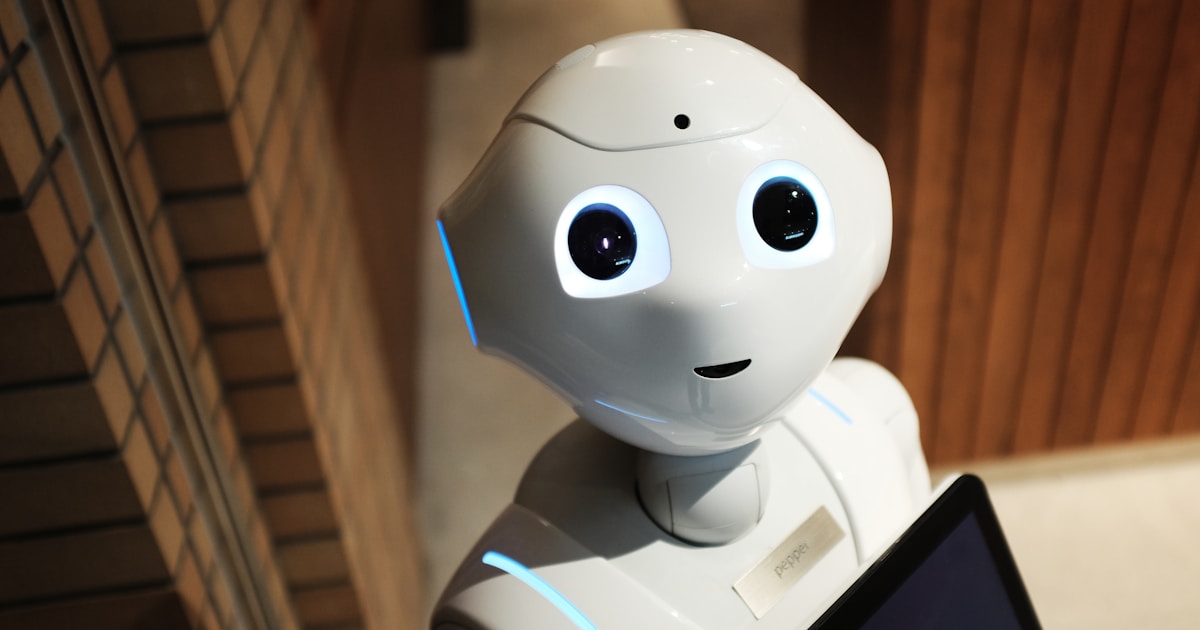
Japan's humanoid robot program is the stuff of science fiction. Honda's ASIMO, introduced in 2000, could walk, run, climb stairs, and recognize faces. It was a marvel of engineering — and a commercial failure. ASIMO was never sold as a product. It was a research platform, a symbol of Japanese technological ambition, and a very expensive one. Honda spent an estimated $300 million on ASIMO development before discontinuing the program in 2018. SoftBank's Pepper, a humanoid robot designed for customer service, fared slightly better commercially but was ultimately discontinued in 2021 after failing to find a sustainable business model.
China's humanoid robot strategy is different. It is not about building a technological marvel. It is about building a product that can be manufactured at scale. Companies like Unitree Robotics, UBTECH, and Fourier Intelligence are developing humanoid robots that are designed from the ground up for mass production. Unitree's H1, a 1.8-meter humanoid that can walk at 5.4 km/h and carry 30 kg, is priced at $90,000 — expensive for a consumer product, but cheap for a humanoid robot, and already being sold to research labs and industrial customers. UBTECH's Walker S has been deployed in NIO's electric vehicle factories for logistics and inspection tasks.
The Chinese government is backing this push with direct funding. In 2025, the Ministry of Industry and Information Technology (MIIT) announced a 10 billion yuan ($1.4 billion) fund specifically for humanoid robot development. The goal is not to build a cool robot. It is to build a supply chain that can produce humanoid robots at the same scale and cost as electric vehicles. Given China's track record in EVs, this is not an idle ambition.
Who Is Really Winning?
The answer depends on the time frame. In the short term — the next five years — Japan's component dominance is secure. Precision reducers, servo motors, and high-end controllers are not products that can be reverse-engineered and mass-produced overnight. They are the result of decades of metallurgy, tribology, and manufacturing process optimization. Chinese companies are closing the gap, but they are not yet at parity. A Chinese robot factory that needs world-class precision will still buy Japanese.
In the medium term — the next decade — the picture shifts. China's robot installation volume is creating a feedback loop that is hard to compete with. More robots in factories means more data on how robots perform in real-world conditions. More data means better AI models for robot control. Better AI means more capable robots. More capable robots mean more installations. It is the same virtuous cycle that has made China dominant in EVs, solar panels, and batteries. Japan's component advantage is real, but components are a smaller and smaller share of the total value of a robot system as software and AI become more important.
In the long term — the next twenty years — the question is whether Japan can transition from a component supplier to a systems integrator for the AI era. Japan's robot companies are still organized around hardware excellence. FANUC's core competency is making machines that run for decades without maintenance. Yaskawa's is motor control at the limits of physics. These are real strengths, but they are not the strengths that win in a world where robots learn from data and improve with every cycle. The Japanese robot industry is the best in the world at building the body. The question is whether it can build the brain — and whether it is willing to partner with AI companies in China, the US, or elsewhere to do so.
The robot race between China and Japan is not a zero-sum contest. Japan's components power China's robots. China's scale drives demand for Japan's precision engineering. The two countries are deeply intertwined in the global robot supply chain. But the direction of travel is clear. China is moving from robot consumer to robot producer to robot innovator. Japan is moving from robot king to critical supplier. Both roles are valuable. Only one is dominant.