Why Is DeepSeek Building Its Own AI Chips? The $50B Startup's Boldest Bet Yet
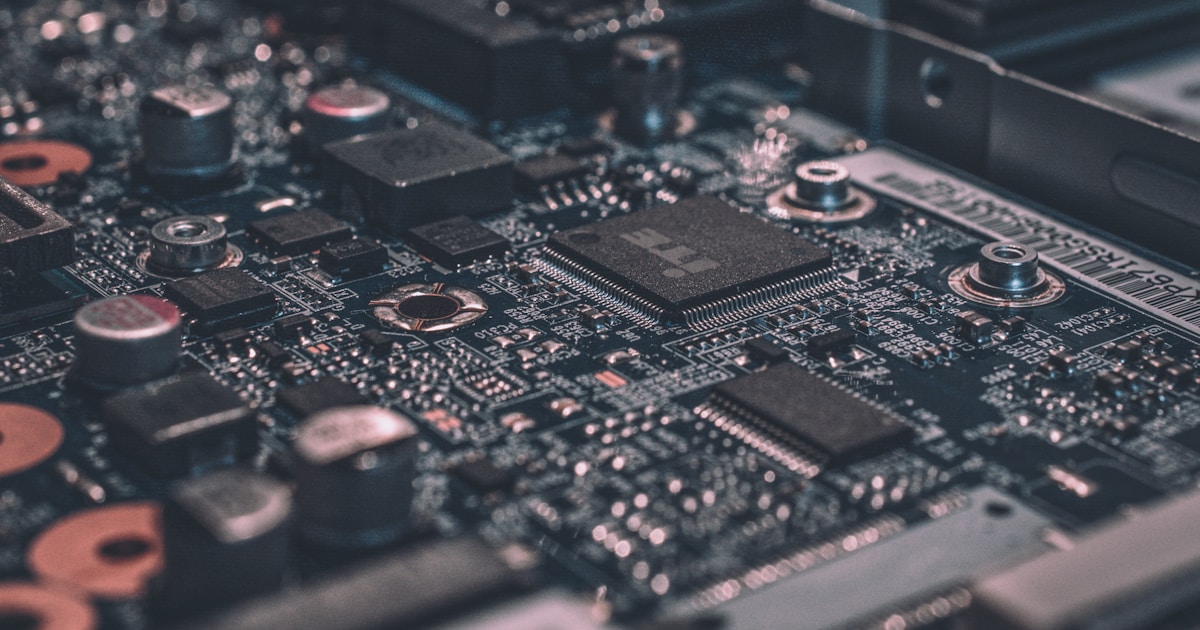
On July 8, 2026, the Chinese AI industry was rocked by a revelation: DeepSeek—the startup valued at over $50 billion—was secretly developing its own custom AI inference chips. The project had been running for roughly a year, and the company was quietly recruiting experienced chip engineers. For a company built on open-source models and low-cost inference, this is more than a new product line—it's a strategic pivot that could reshape China's entire AI industry.
The News: What We Know About DeepSeek's Chip Program
According to reports from Reuters and confirmed across multiple industry sources, DeepSeek's custom chip project has been in development for approximately one year. It's currently in early stages, but the scope is significant.
Key details that have emerged:
- Focus on inference, not training. The chip is designed specifically for running DeepSeek's models efficiently, not for training new ones from scratch.
- Engineer recruitment is underway. The company has been quietly hiring experienced chip designers from established semiconductor companies.
- Foundry partnerships are being established. DeepSeek is engaging with domestic foundry and memory partners.
- Zhipu AI is doing the same thing. China's other AI heavyweight is also developing custom inference chips, suggesting this is an industry trend, not an isolated move.
This isn't just a DeepSeek story. It's a signal that China's AI industry is entering a new phase—moving from "model only" companies to vertically integrated AI platforms that control both software and hardware.
Why Build Custom Chips? The Economic Case
To understand why DeepSeek would venture into semiconductors—one of the most capital-intensive and risky businesses on earth—you have to understand the economics of AI.
Inference Costs: The Silent Budget Killer
For any AI company, inference costs—running the model for actual users—are the single biggest operational expense. Training is expensive, but it's a one-time cost. Inference is continuous, scaling with every user, every query, every chat message.
DeepSeek's business model is built on being the low-cost provider. Their V4 Flash model is already one of the cheapest frontier models in the world to run. But to maintain that advantage as user numbers grow, they need to keep driving down inference costs. Custom chips are the most powerful lever available.
General-Purpose GPU (NVIDIA)
- Designed for many workloads
- Premium NVIDIA pricing
- Supply chain uncertainty
- Export control restrictions
Custom Inference Chip (DeepSeek)
- Optimized for DeepSeek models only
- No supplier markup
- Full supply chain control
- Unlimited scaling potential
The basic math is compelling. If you're running billions of tokens per day, even a 30-40% reduction in per-token inference costs translates to hundreds of millions of dollars in annual savings. For a company at DeepSeek's scale, custom chips pay for themselves quickly—if you can get them right.
The Huawei Problem
In China's domestic AI chip market, Huawei's Ascend series is the clear leader. With a 65% deployment and evaluation rate according to Bloomberg Intelligence, Huawei dominates the domestic alternative to NVIDIA.
But for DeepSeek, depending on Huawei carries its own risks:
- Pricing power: If Huawei is the only game in town for high-performance domestic AI chips, they set the prices.
- Capacity constraints: Huawei has to supply the entire Chinese market. DeepSeek could find itself competing with Alibaba, Tencent, and government projects for chip allocation.
- Strategic dependence: As a direct competitor in AI services, Huawei has its own AI products (Pangu models). Relying on a competitor for your most critical infrastructure is strategically uncomfortable.
Building their own chips gives DeepSeek independence from both NVIDIA export controls and Huawei's market position. It's the ultimate form of supply chain insurance.
This Isn't Just a China Thing: The Global Trend Toward Custom Silicon
DeepSeek isn't inventing a new strategy. Every major AI company in the world is moving toward custom chips.
The US Precedent
In the United States:
- Google has its TPUs (Tensor Processing Units), now in their sixth generation. TPUs power most of Google's AI workloads internally and on Google Cloud.
- Amazon has Trainium for training and Inferentia for inference. AWS is increasingly pushing its custom silicon to cloud customers.
- Meta has its MTIA (Meta Training and Inference Accelerator) program, with multiple generations of custom AI chips.
- OpenAI is reportedly developing its own custom AI chips, working with former Apple chip designers.
- Anthropic is also exploring custom silicon, though at an earlier stage.
The pattern is clear: once an AI company reaches a certain scale, custom chips move from "nice to have" to "strategic necessity." DeepSeek has reached that scale.
What Makes DeepSeek Different
While the strategy is similar to US companies, DeepSeek's situation is unique in several ways:
- More urgent: US companies pursue custom chips for cost optimization. DeepSeek pursues them for supply chain survival. The stakes are higher.
- Inference-first: Many US custom chip programs focus on training. DeepSeek is starting with inference, which aligns with their low-cost business model.
- Smaller team: DeepSeek is a startup, not a giant like Google or Amazon. Their chip team is newer and smaller, though growing fast.
- Domestic manufacturing: US companies use TSMC's most advanced processes. DeepSeek will likely work with domestic Chinese foundries, which lag on cutting-edge nodes.
The DeepSeek Story So Far: From Open-Source Underdog to $50B Giant
To appreciate how audacious this chip move is, you need to understand where DeepSeek came from. This is a company that didn't exist four years ago.
A team of ex-AI researchers launches DeepSeek
The company starts with an open-source approach, releasing models that compete with Meta's Llama series. The focus: technical excellence and affordability.
DeepSeek establishes itself as a serious contender
V2 and V3 models gain attention for strong performance at competitive prices. The company builds a developer following through open weights and accessible APIs.
V4 series becomes a global phenomenon
DeepSeek V4 Flash and V4 Pro (1.6 trillion parameters) redefine cost-performance ratios. Microsoft integrates DeepSeek into Azure, bringing global enterprise customers.
Massive funding round pushes valuation past $50B
DeepSeek raises $7.4 billion in external funding, valuing the company at over $50 billion. The war chest enables ambitious long-term projects—including custom chips.
Custom inference chip program revealed
News breaks that DeepSeek has been developing custom AI inference chips for about a year. The company is hiring chip engineers and engaging foundry partners.
From a standing start to a $50 billion valuation with a custom chip program in three years is extraordinary by any standard. It reflects both the opportunity in AI and the speed of execution in China's tech ecosystem.
The Stakes: What Success Would Mean
If DeepSeek's custom chip program succeeds, the implications go far beyond one company.
For DeepSeek: Cost Leadership Reinforced
Custom chips would cement DeepSeek's position as the low-cost leader in AI. If they can run their own models significantly cheaper on their own hardware, they create a moat that's extremely difficult for competitors to cross. The combination of optimized models and optimized hardware creates a compounding advantage.
The pricing strategy would shift from "we accept lower margins to be cheap" to "our infrastructure is fundamentally cheaper, so we can undercut everyone and still be profitable." That's a very different competitive position.
For China's AI Industry: A Second Major Chip Player
Right now, Huawei is the undisputed leader in Chinese AI chips. A successful DeepSeek chip program would create real competition in the domestic AI chip market:
- More options for Chinese AI companies that don't want to depend on Huawei
- Price pressure on Huawei to keep chip costs competitive
- Innovation acceleration as two major players push each other forward
- Talent development as more companies invest in chip design expertise
💡 The "Second Supplier" Effect
In any technology market, having a credible second supplier changes everything. Customers get leverage, prices come down, and innovation speeds up. For China's AI industry—where Huawei has been the only domestic option at the high end—DeepSeek's entry could be the trigger for a whole new wave of competition and progress.
For the Global AI Market: A New Competitive Dynamic
If DeepSeek can combine competitive model quality with fundamentally lower infrastructure costs, the global AI market would face a real low-cost competitor from China. This would put pressure on Western companies to respond—not just with better models, but with better cost structures.
It also raises interesting questions about export controls. If DeepSeek develops its own competitive AI chips using domestic manufacturing, the whole premise of chip export controls as a tool for slowing China's AI progress becomes weaker.
The Challenges: Why This Won't Be Easy
For all the potential upside, building custom AI chips is enormously difficult. DeepSeek faces significant challenges.
⚠️ The Hard Realities of Chip Development
Custom AI chips have a high failure rate. Even companies with deep semiconductor experience sometimes miss targets. For a company that started as an AI model lab, moving into chip design is a significant organizational and technical challenge. The first generation of chips almost certainly won't beat established alternatives on raw performance. Success means patient, long-term investment across multiple generations.
1. Manufacturing Constraints
The biggest question mark is manufacturing. Cutting-edge AI chips from NVIDIA are made on TSMC's most advanced processes (3nm and below). DeepSeek will likely work with domestic Chinese foundries, which are at least one or two generations behind on process technology.
This doesn't mean the chips can't be useful—architecture and optimization can make up for a lot—but it does mean DeepSeek's chips probably won't match NVIDIA's raw performance per watt anytime soon. The advantage will come from workload-specific optimization, not process technology leadership.
2. Talent and Experience
DeepSeek is an AI model company, not a semiconductor company. Building a world-class chip team takes years. While the company is recruiting experienced engineers, integrating chip designers with AI researchers and building the culture to support both is a significant challenge.
Companies like Google and Amazon have been building custom chips for nearly a decade. DeepSeek is starting from scratch. The learning curve will be steep.
3. Cost and Timeline
Developing a custom AI chip typically costs hundreds of millions of dollars and takes 2-3 years for the first generation. DeepSeek's $7.4 billion funding round gives them runway, but chip development is capital-intensive and unpredictable. First-generation chips often underperform expectations, requiring iteration and additional investment.
The program has been running for about a year, so we're probably 1-2 years away from production silicon. And the first generation might be more of a learning experience than a game-changer.
4. Software Ecosystem
The hardest part of custom chips isn't the hardware—it's the software. NVIDIA's CUDA ecosystem, with years of developer tools, libraries, and community knowledge, is a massive moat. Even with good hardware, getting models and frameworks to run efficiently on a new chip architecture requires enormous software engineering effort.
DeepSeek has one advantage here: they control the models. If they build chips optimized specifically for their own model architectures, they don't need to support the full CUDA ecosystem. They just need to make their own models run fast. That's a much narrower problem.
What to Watch For: Signs of Progress
For anyone following DeepSeek, here are the milestones that would signal the chip program is on track:
Near-Term (Next 6-12 Months)
- Hiring announcements: If DeepSeek adds notable chip industry veterans, it's a sign the program is being taken seriously
- Foundry partnerships: News about which domestic foundry DeepSeek is working with, and at what process node
- Patent filings: Semiconductor-related patent applications would reveal the direction of their chip architecture
Medium-Term (12-24 Months)
- First silicon: The tape-out and first production of DeepSeek's initial chip generation
- Benchmark results: Performance numbers compared to Huawei Ascend and NVIDIA alternatives
- Internal deployment: When DeepSeek starts running inference on its own chips at scale
Long-Term (24+ Months)
- Second-generation chips: The second generation is typically where custom programs start to deliver real value
- External availability: Whether DeepSeek offers chip-based inference to other companies
- Price impact: Whether DeepSeek's chip advantage translates to even lower API prices
The Bigger Picture: China's AI Industry Grows Up
DeepSeek's chip program is more than one company's strategic decision. It's a sign that China's AI industry is maturing.
Three years ago, Chinese AI labs were playing catch-up—releasing open-source models that tried to match what Western companies were doing. Two years ago, they started competing on price and accessibility. One year ago, they started taking global market share.
Now, they're building full-stack capability: models, tools, infrastructure, and chips. The industry is moving from "we can do what they do, but cheaper" to "we're building our own ecosystem from the ground up."
Zhipu AI—the Beijing-based lab behind the GLM model family, valued at over $100 billion—announced its own $4 billion fundraising round the same week, with funds earmarked for "computing infrastructure and large-language-model development." Zhipu is also developing custom chips. When the top two Chinese AI labs are both betting on custom silicon, it's not a coincidence—it's a strategy.
Conclusion: A Bet on Independence and Scale
DeepSeek's custom chip program is a bold bet—on the company's ability to execute, on the future of inference economics, and on the long-term importance of supply chain independence. It won't pay off quickly, and there are real risks of failure or underperformance.
But the logic is sound. At DeepSeek's scale, custom inference chips aren't a luxury—they're a necessity. Every major AI company in the world eventually goes down this path. DeepSeek is just getting there faster than expected, driven by the unique pressures of operating in an environment where access to the best foreign chips can't be guaranteed.
For the broader AI industry, DeepSeek's chip program is another sign that the competitive landscape is shifting. The era when you could build a giant AI business on top of someone else's chips and someone else's cloud infrastructure may be ending. The winners of the next phase will be companies that control their own destiny—from silicon to software to models.
DeepSeek is betting they can be one of those winners. With $7.4 billion in the bank, a proven track record of execution, and a clear strategic rationale, they have a real shot. The chip won't arrive tomorrow, and the first generation might not be impressive. But if DeepSeek pulls this off, the $50 billion startup could become one of the most important AI companies in the world—on its own terms, with its own hardware.