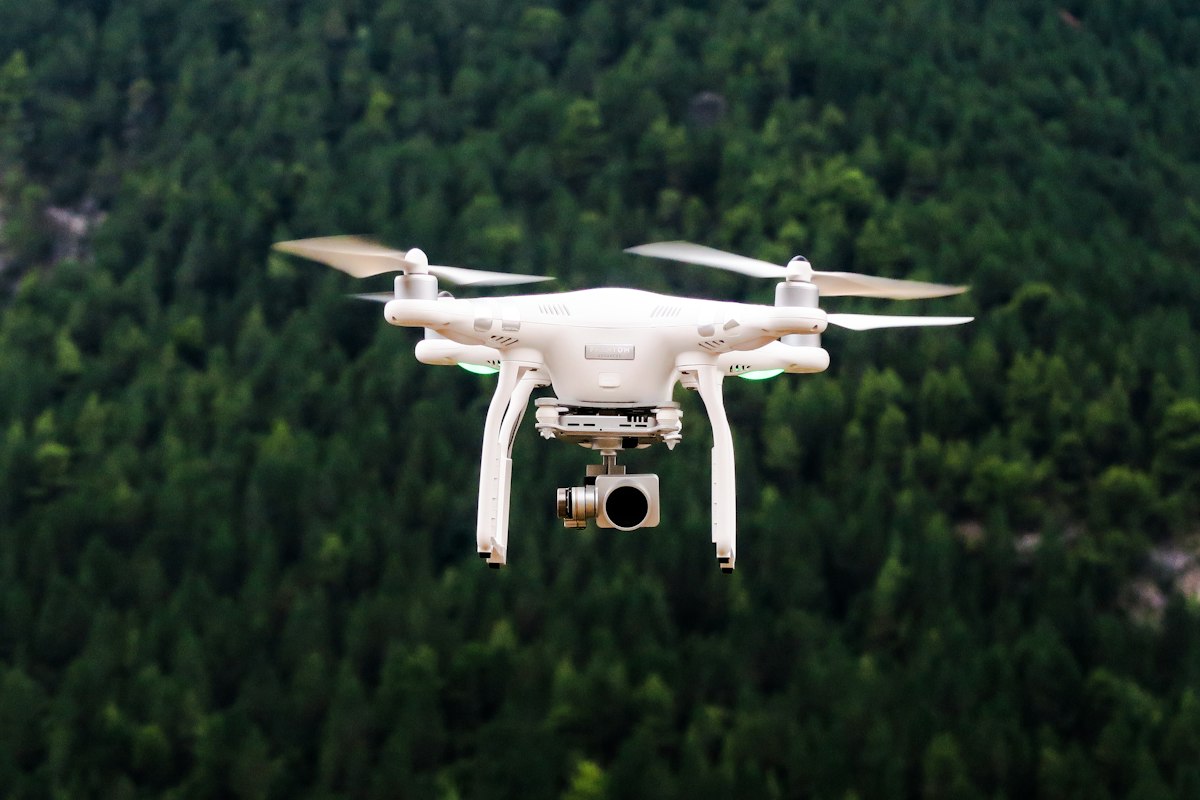
In Shenzhen, one of China's largest technology hubs, a bowl of noodles can arrive at your doorstep in 10 minutes—delivered by a drone that flies over traffic, skips intersections, and crosses rivers in a straight line. The same route by a human rider on a motorbike would take 40 minutes. This is not a futuristic vision. It is daily life in China's emerging drone delivery economy, and it is scaling faster than anywhere else on Earth.
While Western countries are still debating drone regulations and running small pilot programs in select neighborhoods, China has already moved into full-scale commercial deployment. Meituan, China's largest food delivery platform, has completed over 740,000 commercial drone deliveries across more than a dozen cities. SF Express, the country's dominant logistics company, operates over 600 drone routes. JD Logistics runs nearly 50 regular routes across Shanghai, Shenzhen, Chengdu, and Xi'an. And this is just the beginning.
China's government has formally designated drone delivery as a core pillar of what it calls the "low-altitude economy"—a new economic sector focused on commercial activities below 1,000 meters. The policy backing is unprecedented: the low-altitude economy has been incorporated into official government work reports, supported by multiple regulatory measures since 2025, and Guangdong province alone aims to grow its low-altitude economy to over 300 billion yuan (roughly $42 billion) by the end of 2026.
So why is China investing so heavily in drone delivery, and what does it mean for the future of logistics worldwide? Let's break it down.
The Scale: Numbers That Put Western Programs in Perspective
To understand the scale of China's drone delivery ambitions, consider the current landscape:
- Meituan: Operating 65+ routes across Beijing, Shanghai, Guangzhou, Shenzhen, and international routes in Hong Kong and Dubai. Cumulative commercial orders exceeded 740,000 as of late 2025, with 70%+ concentrated in Shenzhen alone. The company has elevated its drone business to CEO-level supervision—a signal of strategic importance.
- SF Express: Over 600 drone routes established across multiple cities, with particular focus on Hainan and Hong Kong corridors. Their "three-stage air transport network" connects large manned aircraft, mid-range cargo drones, and last-mile delivery drones into a seamless logistics chain.
- JD Logistics: Nearly 50 regular test routes across major cities. In rural Sichuan, JD used drones to transport 100+ boxes of cherries in just two hours. In Hubei province, drone logistics improved delivery efficiency by 60% and cut costs by 20%.
- Taobao Flash Delivery: Launched drone routes in Guangzhou and Zhoushan for cross-river and island deliveries, tackling geographic challenges that ground delivery simply cannot solve efficiently.
For comparison, Amazon's Prime Air drone delivery program in the United States launched in 2022 and has been expanding slowly, facing regulatory hurdles at every step. Wing (Alphabet's drone delivery subsidiary) operates in limited areas of Texas and Australia but has nowhere near the route density or order volume that Chinese companies now handle routinely.
Why China? The Structural Advantages
China's rapid deployment of drone delivery is not accidental. It rests on several structural advantages that most other countries lack:
1. Dense Urban Environments
Chinese cities have population densities that make drone delivery economically viable. In Shenzhen, a city of 17 million people packed into an area roughly the size of London, the demand concentration means drones can fly frequent routes with high utilization rates. A single drone hub in a dense urban area can serve tens of thousands of potential customers within a 5-kilometer radius.
In contrast, US cities are generally more spread out. Lower population density means drones would need to fly longer distances between stops, reducing the efficiency advantage over ground delivery. This fundamental geography difference is perhaps the biggest factor explaining why drone delivery has scaled in China but not elsewhere.
2. Government Policy as an Accelerator
China's "low-altitude economy" policy is not just aspirational—it comes with concrete regulatory support. The government has created streamlined approval processes for drone routes, established dedicated low-altitude airspace corridors in participating cities, and provided subsidies for drone infrastructure development.
Meituan received China's first full-territory low-altitude logistics operating license in 2023, granting beyond-visual-line-of-sight (BVLOS) commercial operation authority. This kind of blanket regulatory approval would be nearly impossible to obtain in most Western countries, where drone operations typically require case-by-case waivers from aviation authorities.
3. Manufacturing Proximity
China's drone manufacturing ecosystem—already the world's best thanks to DJI's consumer drone dominance—provides immediate access to hardware, components, and engineering talent. Meituan designs and manufactures its own proprietary drone fleet at a specialized smart factory in Shenzhen. The company's fourth-generation FP400 drone can carry 2.5 kilograms, fly at 83 km/h, and operate within a 5-kilometer delivery radius. The drone uses binocular stereo vision and 4D millimeter-wave radar for obstacle avoidance, with a three-tier safety system that operates in 97%+ of China's urban weather conditions.
This vertical integration—platform, logistics network, and drone manufacturing all controlled by the same company—mirrors the approach that made DJI dominant in consumer drones.
4. Existing Logistics Infrastructure
China already operates the world's most efficient express delivery system, processing over 130 billion parcels annually. The drone delivery network is being built on top of this existing infrastructure, not replacing it. Drones handle specific segments where they have clear advantages—crossing rivers, bypassing traffic congestion, serving islands and mountain communities—while the ground network handles the majority of volume.
The Economics: When Does Drone Delivery Make Sense?
Despite the rapid deployment, drone delivery is not yet profitable. According to S&P Global analyst Sandy Lim, "We would need about one million drone delivery orders to be at a break-even level. We're really far away from that," she noted, estimating breakeven may only come in six to eight years.
The cost structure reveals why:
- High operating costs: Each drone requires trained operators, maintenance staff, charging infrastructure, and dedicated landing points. Current payload limits (about 2.5 kg) restrict drones to lightweight, time-sensitive goods.
- Infrastructure investment: Meituan alone has built 500+ take-off and landing sites in Shenzhen. Each site requires physical space, power supply, safety systems, and integration with the logistics network.
- Regulatory compliance: Even in China, route approvals are fragmented by city. Beijing restricts drone operations near government and military facilities. Each new route requires individual approval.
However, the value proposition is not about replacing traditional delivery—it is about creating a premium tier of service for situations where speed matters most. As Deloitte's Tianbing Zhang explains, "The primary goal is to have service differentiation that ultimately leads to a better consumer experience. The goal is not to compete on price, but on service."
Where drone delivery shines:
- Food delivery: "If you order a bowl of noodles, in 10 minutes you get that bowl of noodles," compared with 20 minutes for a delivery rider. For hot food, those 10 minutes make a real quality difference.
- Medical emergencies: Transporting blood samples, antidotes, and critical medications across congested cities in minutes rather than hours.
- Geographic barriers: Islands, mountain communities, and cross-river deliveries where ground transport adds significant time and cost.
- Rural logistics: JD Logistics demonstrated that drones in rural Sichuan and Hubei improved efficiency by 60% and cut costs by 20%—numbers that make the economics work even at current technology levels.
The Technology: What Chinese Delivery Drones Can Do
Meituan's FP400 drone represents the current state of Chinese delivery drone technology:
- Payload capacity: 2.5 kg—enough for a meal delivery, medical supplies, or small packages
- Speed: 83 km/h cruise speed
- Range: 5 km delivery radius from each hub
- Sensors: Binocular stereo vision + 4D millimeter-wave radar for high-precision obstacle detection
- Safety: Three-tier redundancy system capable of operating in 97%+ of urban weather conditions
- Intelligence: AI-powered flight scheduling, dynamic route optimization, and human-machine coordination systems
Guangdong province has also produced the "Orca" cargo drone, which pushes the envelope further: 100-kilometer range, 15-kilogram payload capacity, and it is already being deployed in 18 countries and regions. This export capability suggests China is positioning itself not just as a domestic drone delivery leader but as a global supplier of the entire technology stack.
The Challenges Ahead
Despite the impressive deployment numbers, significant challenges remain:
Scale Limitations
Even with 740,000+ orders, drone deliveries account for only about 0.01% of Meituan's total delivery volume. The company's overall monthly delivery volume surged to 52 billion orders by 2025. Drones are a tiny fraction of the system—intentionally so, for now.
Regulatory Fragmentation
While national policy supports low-altitude economy development, implementation varies dramatically by city. Beijing restricts drones near sensitive areas. Route-by-route approval processes slow expansion. Public acceptance and noise concerns also vary by neighborhood.
Infrastructure Gaps
Most deliveries still require customers to collect orders from designated landing points rather than receiving them at their doorstep. Building out the network of convenient pickup locations is a major ongoing challenge.
Technical Limits
The 2.5 kg payload limit means drones cannot handle most e-commerce deliveries. Battery technology constrains range and flight time. Bad weather still grounds a significant percentage of planned flights.
What This Means for the Rest of the World
China's drone delivery buildout carries implications beyond its borders:
For developing countries, Chinese drone delivery technology offers a potentially affordable way to build logistics infrastructure in areas where roads are poor or nonexistent. Rural communities, mountain regions, and island nations could leapfrog traditional ground delivery entirely.
For Western regulators, China's experience provides a real-world data set on what large-scale urban drone operations look like in practice—safety records, noise levels, public acceptance, and economic viability. This data could help inform more evidence-based regulatory frameworks.
For the logistics industry globally, China is proving that drone delivery works as a commercial service, not just a technology demonstration. The question is no longer "Can drones deliver packages?" but "Under what conditions is it economically viable?"
Industry analysts estimate drones could eventually account for about 10% of delivery volume in suitable markets. That represents a massive addressable market—and China is positioning its companies to dominate it.
The Bottom Line
China is building the world's largest drone delivery network not because drones are better than human couriers in every scenario, but because they solve specific problems that China's dense cities face: traffic congestion, geographic barriers, and consumer expectations for ultra-fast delivery.
The low-altitude economy policy gives this effort a level of government backing that no other country can match. The manufacturing ecosystem provides world-class hardware at competitive prices. And the existing logistics infrastructure means drones are being added to a system that already works well, not asked to replace one that doesn't.
Will drones replace delivery riders? No. Industry analysts on both sides agree that drones will remain a specialized, supplementary service—perhaps 10% of total delivery volume at maturity. But 10% of China's delivery market would still represent more drone deliveries than the rest of the world combined.
The next time you see a news story about drone delivery in the US or Europe, remember: in China, drones are already delivering noodles, medicines, and packages to hundreds of thousands of customers every month. The future of logistics is not coming—it has already landed, and it is made in China.