Why China's Electric Bus Fleet Is Larger Than the Rest of the World Combined
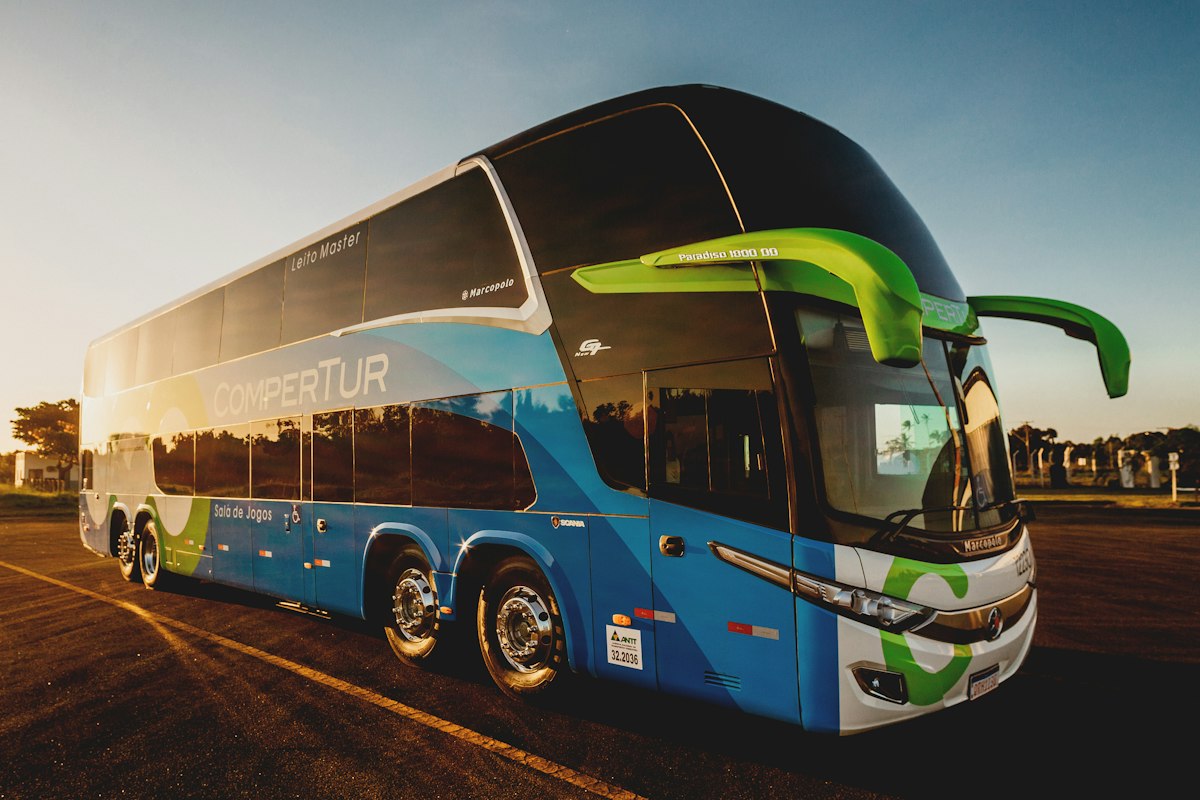
If you've walked through any major Chinese city in the last five years, you've probably noticed something unusual: silence. Not the silence of empty streets—Chinese cities are as crowded as ever—but the silence of buses that no longer roar. China now operates more than 400,000 electric buses, a number that represents roughly 98% of the world's total electric bus fleet. The entire rest of the world combined has fewer than 20,000. How did one country pull so far ahead in electrifying public transit, and what does this mean for cities everywhere?
Shenzhen: The City That Started It All
To understand how China built the world's largest electric bus fleet, you have to start with one city: Shenzhen. In 2017, Shenzhen became the first city in the world to electrify its entire public bus fleet—all 16,359 buses. The city didn't just add a few electric buses to its fleet. It replaced every single diesel bus.
Shenzhen's transformation was remarkable not just for its speed but for its completeness. The city built more than 500 charging stations with over 8,000 charging poles to support the fleet. Each bus depot was retrofitted with charging infrastructure. Bus routes were redesigned to account for charging schedules and battery range. The entire system was reimagined around electric propulsion.
The results were immediate and measurable. Shenzhen's bus fleet now saves an estimated 345,000 tons of fuel annually and reduces carbon dioxide emissions by 1.35 million tons. The city's ambient noise levels dropped measurably. Bus operating costs fell by roughly 50% per kilometer compared to diesel. The air quality improvement near bus depots and busy routes was noticeable within months.
Shenzhen
Beijing
Shanghai
Guangzhou
How Did China Do It? The Policy Engine
China's electric bus revolution didn't happen by accident. It was the result of a coordinated, multi-layered policy framework that combined central government mandates, local government execution, and massive financial incentives.
Central Government Subsidies
Between 2009 and 2022, China's central government provided an estimated $15 billion in subsidies for new energy vehicles, with electric buses receiving the largest per-vehicle subsidies. At the peak of the subsidy program, a single electric bus could receive up to $150,000 in government support—covering nearly the entire cost of the vehicle.
The subsidy structure was deliberately designed to favor larger battery capacities and longer ranges, which pushed manufacturers to innovate on battery technology. The subsidies declined gradually over time, forcing manufacturers to reduce costs and improve efficiency to remain competitive.
Local Government Mandates
Provincial and municipal governments were given specific targets for fleet electrification. Cities like Shenzhen went further than required, turning electrification into a point of civic pride and a competitive advantage for attracting talent and investment. The "Blue Sky" campaigns that many cities launched combined air quality goals with transit electrification targets.
The Manufacturing Ecosystem
China's electric bus success is inseparable from its manufacturing ecosystem. Companies like BYD (Build Your Dreams) and Yutong became the world's largest electric bus manufacturers not by accident but by being in the right place at the right time with the right capabilities.
BYD, headquartered in Shenzhen, started as a battery manufacturer before moving into automobiles. This vertical integration—controlling battery production, vehicle manufacturing, and even chip design—gave BYD cost advantages that foreign competitors couldn't match. The company now sells electric buses to cities across Europe, Latin America, and Asia.
💡 The Battery Advantage
China's dominance in electric buses isn't just about assembly—it's about batteries. Chinese manufacturers like CATL and BYD control the entire battery supply chain, from lithium mining to cell manufacturing to pack assembly. This vertical integration means Chinese electric bus makers can source batteries at prices Western competitors can't match, creating a cost gap that widens every year.
The Economics: Why Electric Buses Make Financial Sense
For transit agencies, the decision to go electric isn't just about environmentalism—it's about economics. Electric buses have significantly lower operating costs than diesel buses:
- Fuel costs: Electricity costs roughly 60-70% less per kilometer than diesel fuel. A diesel bus might consume $40-50 of fuel per day, while an electric bus uses $12-15 of electricity.
- Maintenance: Electric motors have far fewer moving parts than diesel engines. No oil changes, no transmission fluid, no exhaust systems. Maintenance costs are typically 40-50% lower.
- Brake wear: Regenerative braking extends brake life by 2-3x compared to diesel buses.
- Lifespan: Electric buses are expected to last 12-15 years, comparable to or longer than diesel buses.
The total cost of ownership (TCO) for an electric bus in China is now lower than that of a diesel bus over an 8-year operating period. This is the tipping point that makes electrification economically inevitable, not just environmentally desirable.
Chinese Electric Buses Go Global
Having saturated the domestic market, Chinese electric bus manufacturers are now exporting aggressively. BYD alone has sold electric buses to more than 50 countries, including the United States, United Kingdom, Japan, and across Europe.
In Los Angeles, BYD electric buses serve major transit routes. In London, BYD and ADL partnered to deliver hundreds of electric double-decker buses. In Bogota, Colombia, BYD won a contract for over 1,000 electric buses. In Japan, the sacred homeland of Toyota and Honda, BYD electric buses operate in Kyoto—a symbolic victory for Chinese manufacturing.
Yutong, another major Chinese electric bus manufacturer, has exported to over 30 countries including France, Denmark, and Qatar. The company's buses were used during the 2022 FIFA World Cup in Qatar, providing shuttle services for fans.
The "Ten Cities, Thousand Vehicles" Program
China launches its first major new energy vehicle pilot program, targeting 10 cities to deploy 1,000 new energy vehicles each annually. This program kickstarts the electric bus industry.
Shenzhen Goes 100% Electric
Shenzhen becomes the world's first city with a fully electric bus fleet: 16,359 buses. The milestone captures global attention and proves that full electrification is achievable.
National Scale-Up
By 2020, over 60% of China's new bus purchases are electric. Major cities including Beijing, Shanghai, and Guangzhou near full electrification of their core fleets.
Global Export Boom
Chinese electric bus exports surge as European and Latin American cities accelerate electrification plans. BYD and Yutong become the world's top two electric bus exporters.
Next-Generation Technology
Solid-state battery electric buses enter pilot deployment in several Chinese cities, promising 50% longer range and 30% faster charging than current lithium-ion models.
What Western Cities Can Learn
The Chinese electric bus story offers clear lessons for cities everywhere:
1. Total Cost of Ownership Thinking
Western transit agencies often focus on upfront purchase prices, which makes electric buses look expensive. But Chinese cities evaluated total lifecycle costs—including fuel, maintenance, and environmental benefits—and found electric buses cheaper over 8-12 years. This TCO-focused procurement approach is gradually being adopted in Europe and North America.
2. Infrastructure First
China didn't just buy buses and figure out charging later. Charging infrastructure was planned and built alongside bus procurement. Dedicated bus depots were retrofitted with high-power charging stations, and route planning incorporated charging schedules from day one.
3. Scale Creates Economics
A city ordering 10 electric buses pays a very different price than a city ordering 10,000. China's massive orders created the manufacturing scale that drove down costs. Western cities could benefit from joint procurement—ordering together to achieve the scale that makes electric buses affordable.
4. Policy Consistency Matters
China's subsidy programs ran for over a decade with gradual, predictable phase-downs. This gave manufacturers the confidence to invest billions in R&D and production capacity. In contrast, many Western countries have had stop-start subsidy programs that create uncertainty and slow investment.
The Challenges That Remain
Despite the impressive numbers, China's electric bus program faces ongoing challenges:
Battery Disposal and Recycling
With hundreds of thousands of electric buses on the road, battery disposal is becoming a significant environmental challenge. Bus batteries typically need replacement after 6-8 years of intensive use. China is building large-scale battery recycling facilities, but the industry is still maturing.
Grid Infrastructure
Charging hundreds of thousands of large vehicles puts real strain on electrical grids. Some cities have had to upgrade substation capacity and distribution networks to handle the additional load. This is an ongoing infrastructure investment that continues as fleets grow.
Cold Weather Performance
Electric bus range can drop by 30-40% in extreme cold, which affects northern Chinese cities. Manufacturers are working on battery heating systems and improved cold-weather performance, but this remains an engineering challenge.
What's Next: Hydrogen and Solid-State
China isn't resting on its electric bus success. The next frontier includes hydrogen fuel cell buses for long-distance routes where battery range is insufficient, and solid-state battery buses that promise longer range and faster charging.
Several Chinese cities are already piloting hydrogen fuel cell buses. While these remain more expensive than battery-electric buses, the technology is improving rapidly. China's government has signaled strong support for hydrogen as a complementary technology to battery-electric, particularly for heavy-duty and long-distance applications.
Conclusion: The Quiet Revolution
China's electric bus fleet isn't just a statistic—it's a real, measurable, and replicable achievement in urban decarbonization. The 400,000 electric buses on Chinese roads represent the largest concentrated reduction in transportation emissions anywhere in the world.
The lesson for the rest of the world isn't that China has some unique advantage that can't be replicated. It's that coordinated policy, manufacturing scale, and long-term thinking can transform urban transportation faster than most people believe possible. The electric bus revolution didn't happen because China is China—it happened because China decided to make it happen, committed the resources, and sustained the effort over more than a decade.
For cities around the world watching their own electrification efforts, the Chinese experience shows that the transition is not just possible—it's economically rational. The question is no longer whether electric buses can replace diesel buses, but how quickly cities can make the switch.