How NIO Built the World's Most Advanced Battery Swapping Ecosystem
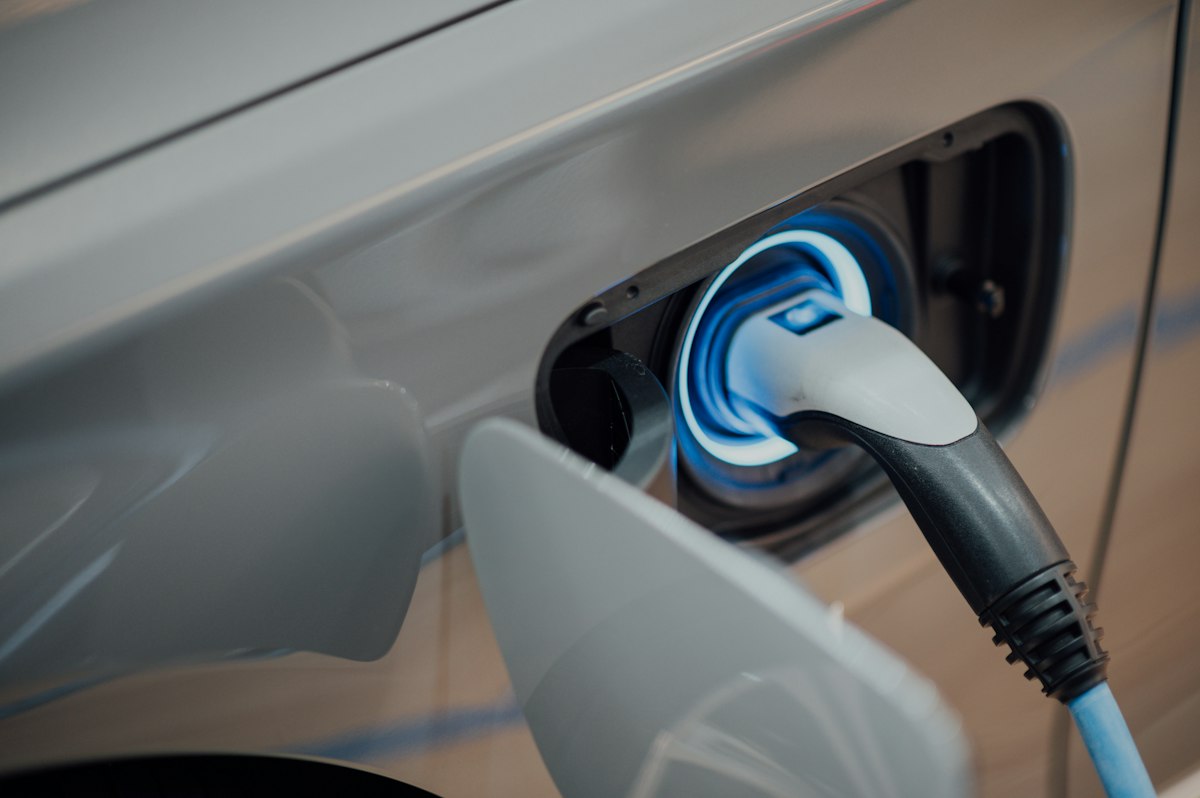
On June 24, 2026, NIO flipped the switch on its 9,000th NIO Power site — a milestone that includes 3,964 battery swap stations, 5,102 charging stations, and 29,373 charging piles. The company has delivered over 200 million cumulative energy services and 110 million battery swaps. The average swap takes 2 minutes and 24 seconds. For a technology that critics spent years calling a dead end, these numbers represent a remarkable vindication.
The Battery Swap Evolution: Four Generations of Progress
NIO's battery swap technology has gone through four distinct generations, each representing a meaningful leap in capability:
Proof of Concept
5 battery compartments, ~5-minute swap time, required staff to guide vehicles into position. Limited to 70/75 kWh and 100 kWh packs. This was the experimental phase — proving that automated battery swapping could work at all.
Full Automation
13 battery compartments, ~4-minute swap time, fully autonomous vehicle positioning. Maximum 312 swaps per day. The generation that proved swapping could scale without human intervention.
Multi-Brand Compatibility
21 battery compartments, ~3.5-minute swap time, support for 60/70/75/85/100/150 kWh packs. Equipped with 2 LiDAR sensors + 2 Orin X chips. Modified to support Onvo (NIO's mass-market sub-brand). Maximum 408 swaps per day.
Speed and Intelligence
23 battery compartments, 2-minute 24-second swap time (22% faster than Gen 3). 6 ultra-wide-angle LiDAR sensors + 4 Orin X chips delivering 1,016 TOPS of computing power. Supports multi-brand wireless autonomous parking. 4.2-meter full-color interactive display. Maximum 480 swaps per day.
Cross-Brand Universal Platform
Compatible with NIO, Onvo, and Firefly brands simultaneously. Target swap time under 2 minutes. Designed for deployment at scale with reduced per-station hardware costs.
"Flash charging, no matter how fast, is still slower than battery swapping. The two exist in fundamentally different orders of magnitude." — William Li, NIO Founder and CEO
The Numbers That Matter
NIO's swap network has reached a scale where the data tells a compelling story:
- 70,000+ daily swaps in 2026 — the highest level ever, averaging one swap every 0.8 seconds nationwide
- 1,036 highway swap stations forming a "9 vertical, 11 horizontal" highway network covering routes to Everest Base Camp, Dunhuang, and the Hexi Corridor — areas once considered impossible for EV travel
- 30% of swap volume now comes from partner brands including Changan/Avatr, Geely, and FAW — proving the model can scale beyond a single automaker
- 20% of monthly orders use Battery-as-a-Service (BaaS) rental, turning the swap network into a recurring revenue channel
- NIO has become one of China's top 5 public DC charging operators with 5,200+ DC fast-charging sites operating at 500V and 1,000V architectures with up to 640 kW peak power
💡 The Economics Are Starting to Work
NIO's Q1 2026 financial report marked its second consecutive quarter of profitability — 25.53 billion yuan in total revenue, up 112.2% year-on-year. The service and community segment, which includes swap stations, generated over 100 billion yuan in 2025 revenue. NIO CFO confirmed that services revenue now covers swap station losses, turning the network from a pure cost center into a self-sustaining ecosystem.
Why Battery Swapping? The Case Beyond Charging Speed
For most people, the appeal of battery swapping is obvious: 2.5 minutes versus 30+ minutes at a fast charger. But NIO's founder William Li argues that speed is only the most visible advantage. The deeper value proposition includes:
Vehicle-Battery Separation
By decoupling the battery from the vehicle, NIO's BaaS model reduces the upfront purchase price. A vehicle that costs $44,000 with a battery can be purchased for $34,000, with the battery leased starting at $108/month (including up to 4 swaps). This makes NIO vehicles more price-competitive while creating a recurring revenue stream.
Battery Longevity and Safety
Swapped batteries are charged under optimized voltage and temperature profiles in climate-controlled stations — avoiding the thermal stress of repeated DC fast charging that accelerates degradation. NIO reports 93% capacity retention after 1,000 swaps, equivalent to roughly 5 years of fleet use. The centralized charging also enables continuous battery health monitoring, catching potential safety issues before they become problems.
Grid Integration
With 23 battery packs per Gen 4 station, NIO's network functions as distributed energy storage. Stations can absorb off-peak power and discharge during peak demand, supporting grid stability. In Sweden, NIO stations have been approved to provide grid frequency regulation services — a small but recurring revenue source per site. William Li projects that with 5 million vehicles on the road, the network could handle 200 billion kWh annually, with service fees and electricity trading差价 forming a sustainable profit model.
Future-Proofing
As battery technology evolves — from current lithium-ion to solid-state batteries targeting 2028-2030 — NIO owners can upgrade to newer battery packs without replacing their vehicles. NIO has already deployed solid-state battery packs across its ET9, ET7, ES7, and EC7 models, with over 20,000 solid-state battery vehicles delivered by February 2026 and 50,000+ orders in the pipeline. The Gen 4 stations are fully compatible with solid-state batteries, requiring no infrastructure modifications.
The European Experiment: Ambition Meets Reality
NIO's European expansion tells a more nuanced story. The company entered Europe in 2021 with its first swap station in Lier, Norway, and by mid-2026 had deployed approximately 92 stations across Norway, Germany, the Netherlands, Sweden, Denmark, the UK, and Belgium/Luxembourg. The network has delivered 300,000 cumulative swaps in Europe, with about two-thirds of European NIO customers now preferring swapping over charging.
However, the pace has slowed considerably. After reaching 50 stations by July 2024, growth has dropped to barely one station per month. NIO has confirmed no new swap stations will be added in Europe in 2026, and the only Danish station was closed in November 2025. William Li has pushed European expansion back to 2028, citing competitive intensity comparable to China.
The slowdown reflects several challenges: EU countervailing tariffs of 20.7% on NIO vehicles (higher than BYD's 17% and Geely-Volvo's 8.3%), weak European sales (just 3 vehicles registered in Germany in May 2026), and budget cuts at NIO Power Europe. The Firefly sub-brand, NIO's cheapest offering, starts at €29,900 in Europe — nearly double its Chinese price due to tariffs.
Yet the H1 2026 European numbers show improvement: 8,420 combined retail deliveries across seven markets, up 89% year-on-year. The new Onvo L60, launched in May 2026 at €38,990 — approximately €7,000 below a Tesla Model Y — contributed 980 units in just seven weeks. Norway remains the strongest market at 2,860 units, benefiting from exemption from EU tariffs.
The Competitive Landscape
NIO isn't alone in the battery swap space. CATL, the world's largest battery manufacturer, operates over 1,200 swap stations in China and has announced plans to bring its modular "Choco" swapping system to Europe starting mid-2026, initially targeting commercial fleets. CATL is partnering with Britain's Octopus Energy for the European rollout.
Meanwhile, ultra-fast charging technology is advancing rapidly. BYD's megawatt-level flash charging delivers 400 kilometers of range in 5 minutes. Zeekr charges to 80% in 9 minutes. Huawei is pushing its supercharging alliance. As charging speeds improve, the differential advantage of swapping narrows — though Li maintains that even the fastest charging is still "orders of magnitude" slower than a 2.5-minute swap.
NIO's swap alliance now includes seven automakers — Changan, Geely, Chery, JAC, GAC, Lotus, and FAW — with CATL participating as an investor. But to date, no partner has launched a mass-produced swap-capable model. The alliance's true value depends on the number of models connected to the network, which remains a critical question for 2026-2027.
The Road Ahead: 2026 Targets and Beyond
NIO's near-term roadmap is aggressive:
- 2026 target: Build 1,000 new swap stations, reaching 4,500-4,600 total by year-end
- Gen 5 stations: Mass deployment starting Q3 2026, compatible with NIO, Onvo, and Firefly brands simultaneously, targeting sub-2-minute swap times
- Partnership expansion: 500 stations to be co-built with China Energy within one year under a June 2026 strategic agreement
- County Access Plan: Extending the swap network into third- and fourth-tier cities and counties, moving beyond the current concentration in first- and second-tier cities
- 15th Five-Year Plan target: 10,000 swap stations, supported by the current annual capacity of 1,000-1,500 new stations
The financial foundation is strengthening. NIO's Q1 2026 results showed revenue of 25.53 billion yuan with a cash reserve of 48.2 billion yuan, providing the capital to sustain aggressive infrastructure investment. William Li has been clear: short-term per-station profitability is not the goal. The priority is building network scale before ultra-fast charging catches up — a strategy that mirrors Amazon's early cloud computing logic of enduring losses to establish an unassailable scale advantage.
Conclusion: Infrastructure as Competitive Moat
NIO's battery swap network represents something rare in the EV industry: a genuinely differentiated infrastructure strategy that competitors can't easily replicate. The combination of 3,964 stations, a decade of engineering refinement, multi-brand compatibility, and grid integration creates a moat that goes far beyond "faster charging."
The risks are real: ultra-fast charging is improving, the swap alliance needs to deliver mass-produced models, and European expansion is on hold. But NIO's second consecutive quarter of profitability, combined with a service ecosystem that now covers its own costs, suggests the "Amazon moment" — the transition from loss-making investment to scalable profitability — may be closer than critics think.
For the global auto industry, NIO's experiment raises a fundamental question: in a world where charging speeds keep improving, does the 2.5-minute swap still matter? NIO's bet is that it does — and with 110 million swaps and counting, they're building the data to prove it.