How China Built the World's Largest Robot Workforce
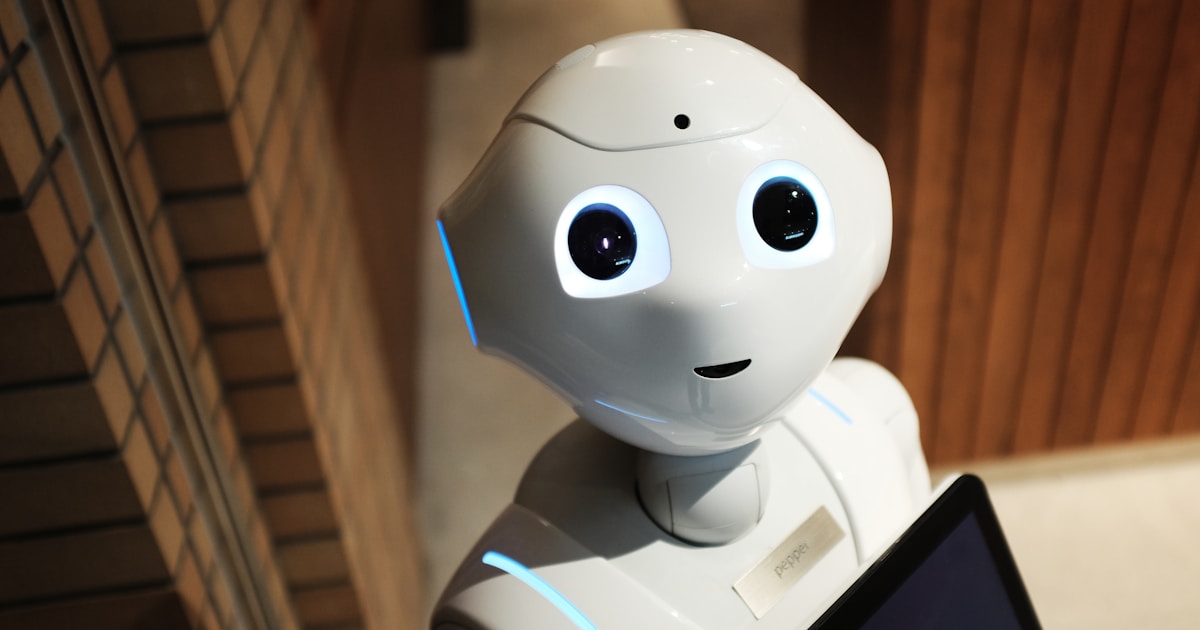
China operates approximately 2 million industrial robots—roughly 4.5 times more than Japan, the world's second-largest robotics nation. In factories from Shanghai to Shenzhen, from Guangdong's electronics plants to Chongqing's automotive lines, mechanical arms move with precision that would have seemed like science fiction two decades ago. But this wasn't an accident. It was a deliberate, state-directed transformation of the world's factory floor.
Beyond the Numbers: What Robot Density Actually Means
Robot density—the number of robots per 10,000 manufacturing workers—isn't just a statistic. It's a measure of a nation's manufacturing sophistication. According to the International Federation of Robotics (IFR), China now ranks sixth in Asia and 22nd globally with a density of 166 per 10,000 workers. But these national averages mask dramatic regional variations.
Shanghai alone has reached 500 robots per 10,000 workers as of 2026, with an ambitious target of 600 by 2028—a level that would rank third globally behind South Korea (1,220) and Singapore (818). The city's three-year action plan, unveiled in January 2026, aims to nurture 100 manufacturing enterprises with annual output above 1 billion yuan each.
Meanwhile, nationally, China's 2026 manufacturing robot density has broken through 500 per 10,000 workers, growing faster than any other country. The gap between leaders and laggards within China itself is striking: while automotive and 3C electronics sectors boast 72% and 65% automation rates respectively, traditional industries like textiles, hardware, and agricultural processing remain stuck at much lower levels.
The Strategic Vision: From "Made in China" to "Smart Made in China"
China's robot revolution didn't happen by accident. It was architected through a series of national plans that mapped out industrial transformation over decades:
2015: "Made in China 2025"
The blueprint that started it all. This policy identified robotics as a core pillar of industrial upgrading, setting targets for domestic robot manufacturing and deployment. Local governments followed with their own subsidies, tax breaks, and land grants for robotics companies.
2021: 14th Five-Year Plan
Humanoid robotics was listed as a key area for technological breakthroughs. The government identified it as strategically important for China's future manufacturing competitiveness.
2023: Ministry of Industry and Information Technology Roadmap
A detailed policy document set specific targets: mass production of core humanoid robot components by 2025, and domestic supply chain security by 2027. These weren't suggestions—they were marching orders.
2026-2030: 15th Five-Year Plan
Robotics sits at the center of China's modern industrial system. AI research is directed explicitly toward physical applications, backed by state investment funds targeting embodied AI development.
"Government policy in China works differently than in Western markets—when Beijing identifies a sector, capital and infrastructure follow at a speed and scale that private markets alone rarely match." — Industry Analyst
The Domestic Manufacturing Boom
Perhaps the most significant development in China's robotics story is the rise of domestic robot manufacturers. Chinese companies have grown their share of domestic installations from just 30% in 2020 to 57% in 2024—a remarkable transformation in just four years.
This domestic surge has strategic implications that extend far beyond manufacturing economics:
| Metric | 2020 | 2024 | Change |
|---|---|---|---|
| Domestic Robot Share | 30% | 57% | +27 points |
| Metals/Machinery Sector | ~50% | 85% | +35 points |
| Electronics Industry Installations | ~50% | 64% | +14 points |
| Domestic Supply in Electronics | ~40% | 59% | +19 points |
In the metals and machinery sector, Chinese suppliers now command 85% of the domestic market. This means China is no longer dependent on foreign robotics companies to sustain its automation trajectory—a crucial point as geopolitical tensions with the West continue to fluctuate.
Humanoid Robots: The New Frontier
While industrial robot deployment has been impressive, the 2025-2026 period has seen China make its boldest move yet: mass production of humanoid robots. According to TrendForce, China's humanoid robot output is projected to surge 94% in 2026, with Unitree Robotics and AgiBot expected to capture nearly 80% of total shipments.
Unitree R1
AgiBot
BYD Humanoid
Leju/Dongfang Joint Venture
Unitree's IPO application on China's STAR market has been accepted at a reported target valuation of $7 billion. This isn't just about factories anymore—it's about building an entirely new industry.
The "Body Layer" Strategy: Why Physical AI Matters
Alpine Macro's chief geopolitical strategist Dan Alamariu coined the term "body layer" to describe the competition in physical robot deployment, embodied AI training, and manufacturing ecosystems. This is distinct from the "brain layer"—frontier model development and software—that typically dominates Western AI discussions.
The strategic importance of this distinction cannot be overstated:
💡 Why the "Body Layer" Matters
Every additional hour of real-world robot operation generates sensor data, failure modes, and corrective feedback that improves the next generation of physical AI models. China’s installed base is running this experiment at a scale no other nation can match. This creates a compounding advantage: more robots generate better data, which produces better AI, which makes robots more capable.
Supply Chain Independence: The Rare Earth Advantage
China's robotics dominance isn't just about robot counts. It's about controlling the critical materials and components that robots need. According to Alpine Macro analysis from May 2026:
- 85-90% of global rare earth processing capacity is controlled by China
- 80-90% of critical robotics hardware components come from Chinese suppliers
- NdFeB magnets (essential for robotic actuators) are predominantly Chinese-made
This supply chain dominance means that even if other countries wanted to rapidly expand their robotics industries, they would still depend on Chinese inputs—the same vulnerability that has become apparent in semiconductor supply chains.
The Mega Project Revolution
Beyond factory floors, China is deploying robots at scale in infrastructure mega-projects. A China Daily report from May 2026 documented how robots are being used in major construction projects across the country.
Shanghai's construction sector is using three categories of robots:
- Independently developed: Molding robots and foundation welding robots created by project teams
- Jointly developed: Robots created in partnership with domestic robot manufacturers
- Directly purchased: Including some imported equipment
The key insight from project managers: "A large proportion of the robots being used on the project are made in China or have Chinese origins." This is changing how major infrastructure is built—and how it can be built faster.
The Small Business Challenge
Despite impressive national numbers, China's robot deployment remains uneven. Large enterprises in the Yangtze River Delta and Pearl River Delta have largely completed automated production line transformation, with collaborative and intelligent robots widely deployed.
But small and medium enterprises (SMEs)—which make up the vast majority of Chinese manufacturers—face significant barriers:
- Insufficient capital: Automation requires upfront investment that many SMEs cannot afford
- Customization costs: Production lines vary significantly, requiring expensive custom integration
- Talent shortages: Skilled workers to operate and maintain robots remain scarce
- Robot penetration rate: Only about 20% for SMEs, versus near-universal adoption in large firms
The government's next push focuses specifically on helping SMEs adopt automation through lighter, more flexible robot solutions that don't require massive infrastructure investment.
Global Forecast: Where the Market Is Heading
According to IFR projections, global industrial robot installations are forecast to surpass 700,000 units in 2028, with a compound annual growth rate of approximately 7%. China will continue to dominate this growth.
Domestic supplier share reaches 30%
Chinese robot manufacturers begin gaining meaningful domestic market share.
Domestic share hits 57%
In just four years, Chinese suppliers overtake foreign competitors in their home market.
Unitree R1 launches at $5,900
Humanoid robot price point that analysts said was years away arrives ahead of schedule.
2 million operational robots
China's installed base reaches 4.5x Japan's count, creating unmatched real-world AI training data.
Shanghai targets 600 density
If achieved, Shanghai would rank third globally behind only South Korea and Singapore.
What This Means for the Global AI Race
The conventional AI competition scorecard focuses on semiconductor fabrication, large language model performance, and compute cluster scale. But this scorecard misses an entire dimension of the contest.
China's physical AI advantage—built on factory floors rather than in data centers—creates a strategic position that is genuinely difficult to counter:
- Data generation at scale: More robots operating 24/7 means more training data for physical AI
- Manufacturing cost advantage: Domestic supply chains reduce costs while improving quality
- Supply chain control: Rare earth and component dominance creates barriers to entry
- Policy continuity: Long-term planning allows sustained investment over decades
Investors and policymakers who assess the US-China AI race solely through the semiconductor and software scorecard are working with an incomplete map of the contest. The body layer—where AI meets physical reality—is being won on factory floors, and China is building an insurmountable lead.
Conclusion: The Factory Floor as AI Battleground
China's journey from the world's factory to the world's robot leader wasn't inevitable. It required vision, sustained investment, and a willingness to accept short-term pain for long-term gain. But the results speak for themselves: 2 million robots, 54% of global installations, and a domestic supplier base that can operate independently of foreign technology.
For Western observers, the lesson is uncomfortable but important: the AI competition isn't just about who has the best chatbots or the most powerful GPUs. It's about who can translate artificial intelligence into physical capability—and China has built an unmatched advantage in doing exactly that.
The robots are multiplying. And they're getting smarter with every hour they work.