How China Built the World's Largest AI Data Center Network
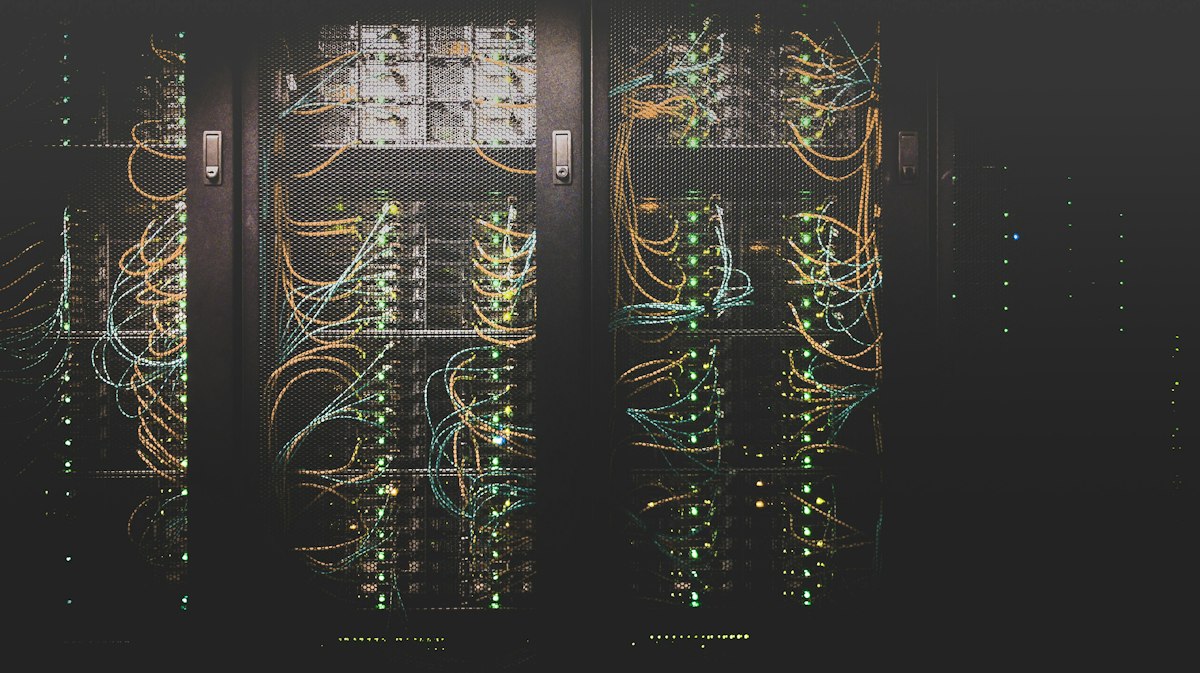
China is currently building AI data centers at a pace that dwarfs every other country on Earth. By 2026, Chinese AI companies are expected to invest over $70 billion in data center infrastructure—and that number is accelerating. But what makes China's approach fundamentally different isn't just the money. It's the strategy behind it.
The "East Data, West Computing" Strategy
In February 2022, China launched a national project called "东数西算" (East Data, West Computing)—a massive infrastructure initiative that fundamentally reimagines how computing resources should be distributed across a country the size of a continent. The idea is counterintuitive but strategically brilliant: move the data centers to where the energy is, not where the users are.
China's eastern provinces—Guangdong, Shanghai, Beijing, Zhejiang—generate the majority of the country's data demand. They're also the most densely populated, most expensive, and most energy-constrained regions in the country. Meanwhile, western provinces like Guizhou, Inner Mongolia, Gansu, and Ningxia have abundant land, cheap renewable energy (hydro, wind, solar), and cooler climates that naturally reduce cooling costs.
The government designated eight national computing hubs: three in the east (Beijing-Tianjin-Hebei, Yangtze River Delta, Greater Bay Area) to handle real-time, latency-sensitive workloads, and five in the west (Inner Mongolia, Guizhou, Gansu, Ningxia, and Chengdu-Chongqing) for batch processing, model training, and data storage. By 2026, these hubs are interconnected through a dedicated high-speed optical network with latency under 10 milliseconds between hubs.
💡 Why This Matters Globally
The "East Data, West Computing" model solves a problem every country faces: data centers consume enormous amounts of electricity and water. By moving compute to where energy is cheapest and cleanest, China reduces costs and carbon emissions simultaneously. The US, by contrast, concentrates its data centers in Northern Virginia (which now faces serious power constraints), making it harder to scale sustainably.
Liquid Cooling: China's Secret Weapon
One of the most underappreciated aspects of China's AI infrastructure advantage is its early and aggressive adoption of liquid cooling technology. While most Western data centers still rely on traditional air cooling, Chinese operators have been deploying direct-to-chip liquid cooling and immersion cooling at scale since 2023.
Why does this matter? AI training clusters—especially those running large language models with tens of thousands of GPUs—generate heat densities that air cooling simply cannot handle efficiently. A single NVIDIA H100 GPU draws up to 700 watts. A cluster of 10,000 H100s generates 7 megawatts of heat. Air cooling such a cluster requires massive CRAC (Computer Room Air Conditioning) units that themselves consume significant power.
Liquid cooling, by contrast, can remove heat 3,000 times more efficiently than air. This enables:
- Higher GPU density: More GPUs per rack without thermal throttling
- Lower PUE: Power Usage Effectiveness drops from 1.4-1.6 (air-cooled) to 1.1-1.2 (liquid-cooled), meaning less energy wasted on cooling
- Longer hardware lifespan: GPUs running at lower, more stable temperatures degrade more slowly
- Quieter operation: No jet-engine fans required
Chinese companies like Alibaba Cloud, Huawei, and Inspur have been manufacturing liquid cooling solutions domestically, reducing dependency on foreign suppliers. The government's mandate that new large-scale data centers must achieve a PUE below 1.25 has effectively forced the industry to adopt liquid cooling as standard, not optional.
"China's liquid cooling adoption is about 3-5 years ahead of the US market. By 2026, over 50% of new Chinese AI data center capacity uses some form of liquid cooling, compared to roughly 15% in the US." — Industry Analyst
The Modular Construction Revolution
Another area where China's data center strategy diverges from the West is in construction methodology. Chinese data center builders have embraced prefabricated modular construction at a scale that makes traditional brick-and-mortar building look slow by comparison.
Huawei's FusionDC solution, for example, delivers fully functional data center modules that are manufactured in factories, shipped to site, and assembled like Lego blocks. A 1,000-rack data center can be deployed in 6-9 months, compared to 18-24 months for traditional construction. This speed advantage is critical in the AI race, where every month of delay means competitors can train more models and capture more market share.
🇨🇳 China Approach
- Prefab modular construction
- Government-mandated PUE targets
- Liquid cooling as standard
- Western renewable energy zones
- 6-9 month deployment cycles
🇺🇸 US Approach
- Traditional + modular hybrid
- Market-driven efficiency
- Air cooling still dominant
- Concentrated in Virginia/Oregon
- 18-24 month deployment cycles
Who's Building What: The Major Players
China's AI data center boom isn't driven by a single company—it's a coordinated effort across cloud providers, telecom operators, and AI startups:
Alibaba Cloud (阿里云)
Alibaba operates the largest cloud infrastructure in China with data centers across 27 regions globally. In 2025-2026, Alibaba committed over $50 billion to AI and cloud infrastructure over three years. Its data centers increasingly use proprietary Yitian 710 ARM-based server chips, reducing dependence on Intel and AMD.
ByteDance (字节跳动)
As the parent company of TikTok and Douyin, ByteDance has become one of the world's largest consumers of AI compute. The company's Doubao (豆包) AI model requires massive inference capacity. ByteDance is building dedicated AI data centers with liquid cooling and has been one of NVIDIA's largest customers in China before export restrictions tightened.
Huawei Cloud
Huawei builds data centers using its own Ascend AI chips, Kunpeng server CPUs, and Atlas AI servers. This vertical integration—from chips to cooling to cloud software—gives Huawei a unique position in China's AI infrastructure market, especially as US chip restrictions make NVIDIA GPUs harder to obtain.
China Telecom, China Mobile, China Unicom
The three state-owned telecom operators are massive data center builders in their own right. They're building "computing power networks" (算力网络) that treat computing resources like a utility—similar to how they deliver electricity or water. The goal: any enterprise in China should be able to access AI computing power as easily as they access broadband internet.
The Energy Challenge
No discussion of AI data centers is complete without addressing the elephant in the server room: energy consumption. A single large AI training run can consume as much electricity as 100 American households use in a year. A hyperscale data center campus can draw 300-500 megawatts—equivalent to a mid-sized city.
China's solution is to co-locate data centers with renewable energy sources. The western computing hubs are strategically positioned near massive hydroelectric dams (Guizhou), wind farms (Inner Mongolia), and solar installations (Gansu, Ningxia). Some data centers are being built literally adjacent to solar farms, with dedicated transmission lines that bypass the public grid.
China is also pioneering "green data center" certification with strict requirements for renewable energy usage, water conservation, and carbon emissions. By 2025, all new large-scale data centers were required to have a PUE below 1.3, with the target dropping to 1.25 by 2027.
What This Means for the Global AI Race
The data center is the factory of the AI age. Just as the Industrial Revolution was won by countries that built the best factories, the AI revolution will be shaped by countries that build the best computing infrastructure. China's approach—government-coordinated, modular, liquid-cooled, and renewable-powered—represents a fundamentally different model from the market-driven, venture-funded approach of the United States.
Neither model is inherently superior. The US model excels at innovation and flexibility; the Chinese model excels at speed and scale. But as AI models grow larger and more compute-intensive, the infrastructure advantage may prove decisive. A country that can deploy 10,000-GPU clusters in six months will simply train more models than one that takes two years.
East Data, West Computing Launched
Eight national computing hubs designated, national optical backbone network planned.
PUE Standards Tightened
New large data centers required to achieve PUE below 1.3, effectively mandating liquid cooling.
Prefab Construction Goes Mainstream
Huawei, Inspur, and others deploy modular data centers in under 9 months.
$50B+ Annual Investment
Alibaba, ByteDance, and telecom operators accelerate AI data center construction.
Computing Power Networks Go Live
Interconnected hub network delivers AI compute as a utility across China.
Conclusion: The Infrastructure Advantage
China's AI data center strategy is not about building the most advanced individual facilities—it's about building a national computing infrastructure that treats AI compute as a strategic resource, like electricity or water. The "East Data, West Computing" framework, combined with aggressive liquid cooling adoption, modular construction, and renewable energy co-location, creates a system that can scale faster and more sustainably than any other country's approach.
For the global AI industry, China's data center buildout carries an important lesson: the AI race isn't just about algorithms and models. It's about the physical infrastructure that makes those models possible. The countries and companies that build the best factories for AI will have a structural advantage that no amount of algorithmic innovation can overcome.
Whether you view China's approach as a model to learn from, a competitive threat to respond to, or simply a fascinating case study in infrastructure strategy, one thing is clear: the world's largest AI data center network didn't happen by accident. It was built—deliberately, methodically, and at a speed that demands attention.